Workplace Design Consultancy Strategic Brand Design

Written by
Gareth Van Zyl
Contents
Modern businesses are rapidly moving beyond the notion that office design is simply about visual impact. Today’s leaders recognise that their workplaces are powerful tools to shape brand identity, support business goals, and inspire people. A well-designed space no longer just looks impressive – it reflects who you are and what you stand for.
As employees return to offices and organisations reimagine their cultures, design has become a strategic asset. When every detail aligns with your purpose and values, you create environments that elevate workplace morale and leave a lasting impression on clients and teams alike.
Defining Workplace Design Beyond Visual Appeal
Designing for the modern workplace means going deeper than style guides or the latest trends. It’s about embedding your culture, values and purpose into every element. It’s about embedding productivity, commitment, and work into your workspaces. The impact of workplace design on productivity is not to be underestimated.
Brand design should underpin your workspace strategy from the outset, not be applied as an afterthought. When you approach design holistically, you can translate your story into a tangible experience. Furniture consultancy and office design come hand in hand in creating a better, more cohesive office space; their value is not to be denied.
For example, consistent colour palettes and materials can subtly communicate stability or innovation, while spatial layouts can encourage collaboration or focus. A technology brand might use clean lines and dynamic zones to echo agility, while a heritage firm could choose warm textures and structured spaces to convey trust.

What is The Role of Brand Identity in Workplace Design?
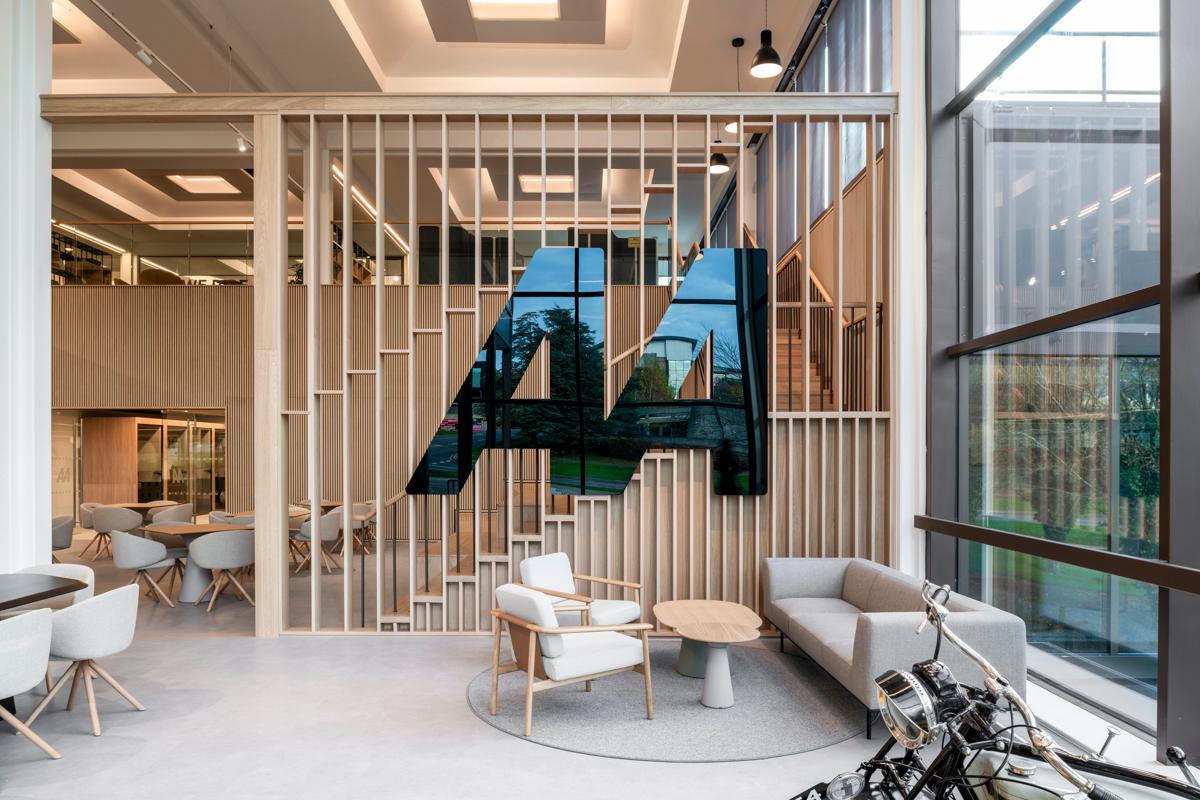
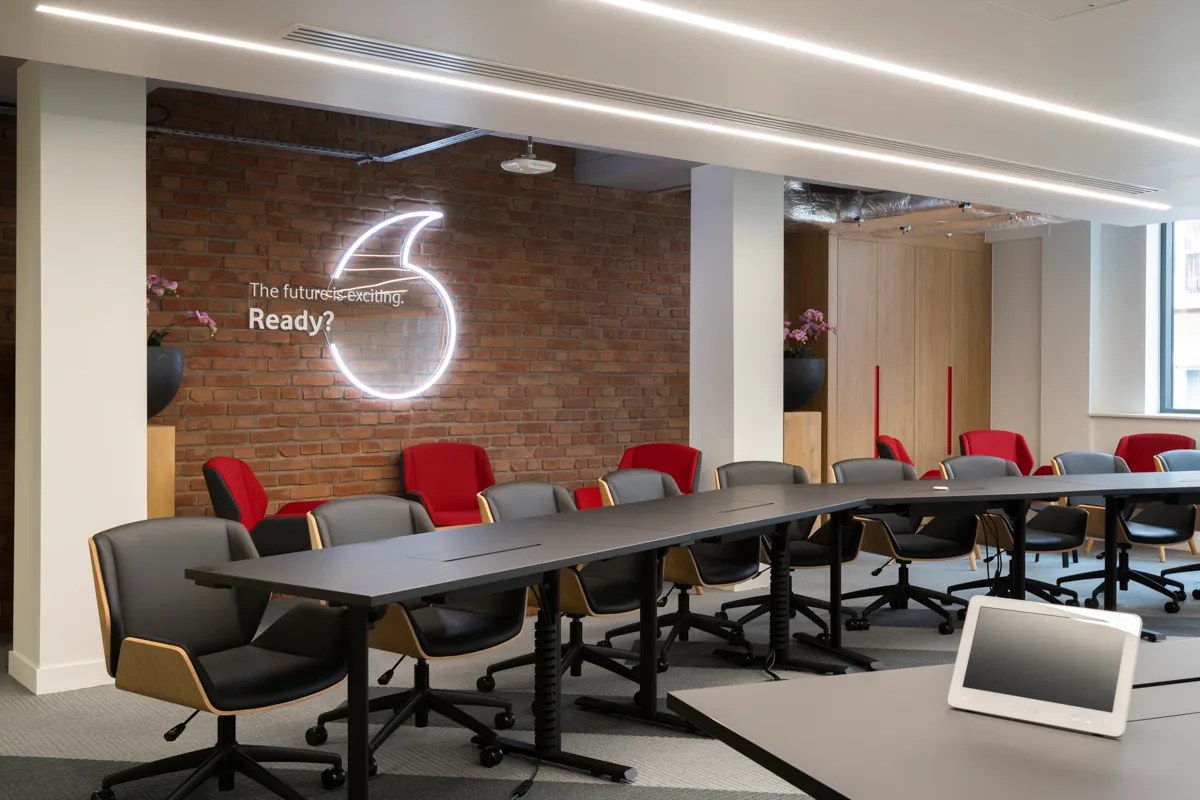
Your brand identity doesn’t stop at your logo or website. It lives in every touchpoint across your workplace – from reception areas to breakout zones. Creating a coherent story from the art on the walls, to the chairs and branded furniture, it is all necessary when enhancing physical brand design. When your environment consistently reflects your story, you reinforce trust and make your culture visible.
Consider an anonymised case study: a financial services firm refreshed its headquarters to project transparency and approachability. By replacing opaque partitions with glass meeting rooms and integrating brand colours throughout open office spaces, they created a sense of openness that resonated with both clients and employees.
When your workspace aligns with your brand, it becomes an authentic extension of who you are.
How to Create Spaces that Boost Workplace and Employee Morale
Thoughtful design doesn’t just look good, it has a proven impact on wellbeing and performance. Research by Human Spaces found that biophilic design – incorporating natural elements – can increase employee productivity by 6% and creativity by 15%. Open spaces that balance collaboration with quiet zones can help people feel energised rather than overwhelmed.
Oftentimes, open plan offices have been found to be more cost-efficient. With a reduction from as little as 3 to 1 and as high as 5 to 1. You could go from 5 employees to anywhere between 15 and 25.
Tailored design solutions also support pride and ownership. When employees see their values and needs reflected in the environment, they feel more engaged and valued. This connection can make a real difference to workplace morale over time.
Here are some quick, actionable ways to add those little spaces that will help boost employee morale:
Introduce natural light wherever possible to support circadian rhythms and reduce fatigue. Consider skylights, glazed partitions or positioning desks near windows.
Incorporate biophilic elements such as indoor plants, living walls or timber finishes to bring nature into everyday spaces.
Provide a variety of settings – from collaborative lounges to quiet zones, so employees can choose an environment that suits their mood and task.
Use colour theory in shared areas to create a sense of belonging without overwhelming the senses.
Gather feedback through surveys and workshops to understand which design features most positively impact morale and engagement.

How to Design Open Office Spaces to Balance Collaboration and Brand Identity
Open office spaces have become a staple of modern design, offering flexibility and improved communication. There has always been a debate about is open plan offices are good for productivity, especially since COVID. The general consensus is that while they come with challenges, including noise and distraction, they offer greater flexibility and better collaboration opportunities.
Zones can help mitigate these drawbacks. Quiet libraries, acoustically treated meeting pods, and focus areas allow employees to choose how they work without compromising your culture.
For example, an open-plan creative agency might define collaborative areas with bold graphics and brand colours, while reserving calmer spaces with muted tones for focused work. In this way, your brand identity remains cohesive, even in a fluid environment. Here are easy ways to incorporate these ideas into your workspace:
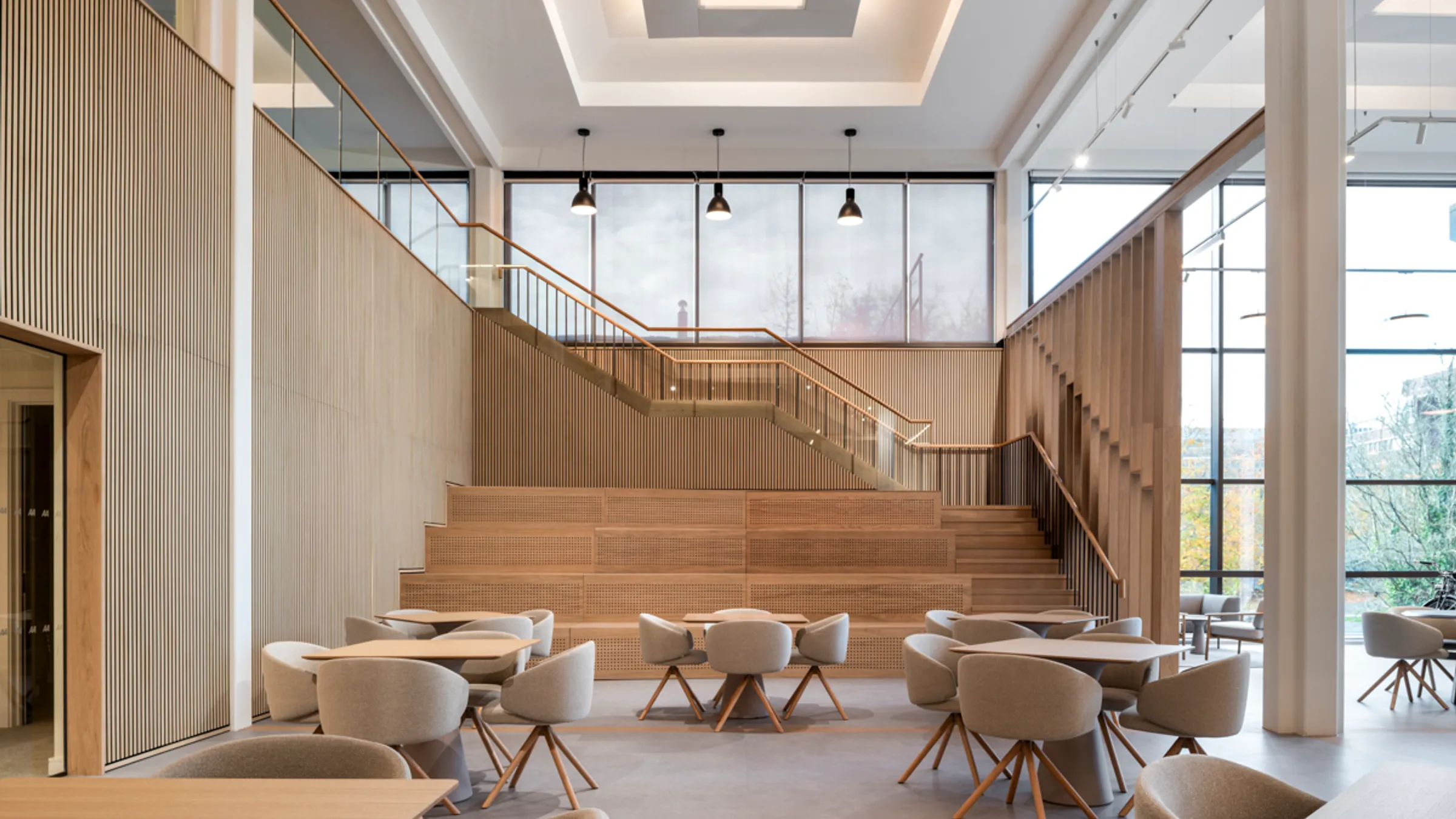
Define clear activity zones by using floor finishes, lighting and furniture layouts to signal different functions – for example, a vibrant collaboration hub versus a focused work area.
Integrate acoustic solutions such as sound-absorbing panels, soft furnishings and ceiling baffles to reduce noise without compromising openness.
Use branded graphics, signage and colour accents to reinforce identity and guide movement throughout the space.
Offer flexible workstations that can be easily reconfigured as team needs evolve, supporting both collaboration and privacy.
Introduce enclosed meeting pods or retreat spaces where employees can step away from the open floor when deeper concentration is required.
Technological Implementation in Workplace Design
Integrating technology into workplace design is no longer a nice-to-have; it’s essential for supporting agile, future-focused teams. From a technologically advanced smart desk to basic plug-and-play tech furniture, technical integration is becoming more and more important for the quality of work and keeping employees. When thoughtfully planned, technology not only enhances day-to-day operations but also reinforces your brand identity and commitment to innovation.
From smart booking systems that streamline hot-desking to integrated AV solutions that connect global teams, technology helps create seamless experiences across the workspace. Digital touchpoints in reception areas can showcase brand stories and welcome visitors with personalised content, while collaboration tools embedded into meeting spaces enable more efficient, connected ways of working.
Equally important is ensuring these solutions blend harmoniously with the physical environment. Concealed cabling, intuitive controls and flexible infrastructure keep spaces clutter-free and adaptable, preserving both aesthetic appeal and practicality. Or for a more biophilic technical office, integrating more visual elements would work just as well.
A technological office will need to be more biophilic and sustainably aware; the more technology, the higher the carbon output will be. There are several key considerations when considering technological integration.
By embracing modern technology, you demonstrate to employees and clients that your business is progressive, dynamic, and ready to evolve. It’s another way that workplace design can actively support culture, productivity and long-term growth.
Workplace Design Consultancy with Sketch
A consultancy-led approach ensures your workplace delivers lasting value, rather than short-lived novelty. By blending strategic insight, evidence-based design, and brand alignment, you create spaces that evolve alongside your business.
At Sketch Studios, we specialise in designing adaptable environments that capture your essence and inspire your teams. Our expertise means you can be confident your workplace will stand the test of time while supporting your goals. Whether it's office design, furniture consultancy or a total office refurbishment you are looking for - Sketch Studios is the company for you.
When you move beyond aesthetics, you unlock the full potential of your workplace as an extension of your brand and a catalyst for positive change. A thoughtfully designed space builds trust, boosts morale, and empowers your people to thrive.
If you’re ready to explore how your workspace can reflect your story and support your ambitions, we’d love to help. Get in touch to discuss your workplace transformation today.
FAQs about Strategic Workplace Design
1. What is the difference between aesthetics and strategic workplace design?
Strategic workplace design goes beyond visual aesthetics to embed culture, values, and purpose into every element, aiming to shape brand identity, support business goals, and inspire people, rather than just looking impressive.
2. How does workplace design influence brand identity?
Workplace design influences brand identity by ensuring every detail aligns with a company's purpose and values, creating environments that reflect who the brand is and what it stands for, and reinforcing trust with consistent messaging from reception areas to breakout zones.
3. Can an open plan workplace design truly boost employee morale and productivity?
Yes, open office spaces, when thoughtfully designed with a balance of collaborative and quiet zones, can boost employee morale and productivity by fostering flexibility, improved communication, and a sense of engagement, while mitigating noise and distraction with solutions like acoustically treated pods.
4. What role does technology play in modern workplace design?
Technology in modern workplace design is essential for supporting agile and future-focused teams, enhancing day-to-day operations, and reinforcing brand identity and commitment to innovation through solutions like smart booking systems, integrated AV, and digital touchpoints.
Published on
November 10, 2025