Space-saving Solutions: Maximising Small Workplace Designs

Written by
Gareth Van Zyl
Contents
What is Space-Saving Furniture?
Space-saving furniture refers to thoughtfully designed pieces that reduce physical footprint without compromising on functionality, comfort, or aesthetics. These solutions are crafted to adapt, integrate and support multiple work modes, helping teams stay agile in a fast-moving world.
As the modern office continues to evolve, so too does the demand for intelligent, space-saving furniture design. Space-saving furniture is no longer a ‘nice to have’, it’s a strategic imperative. For many, the workplace is no longer just a fixed location - it’s a collaborative destination, a co-working hub, and a branding tool all at once.
Space-saving office furniture can help businesses maximise their floorplate, boost team performance, and future-proof their workspace. From compact furniture that fits more function into less space to multipurpose furniture that adapts to changing needs, space-efficient design is key to creating agile, human-centric environments that support business performance.

How to Implement Space-Saving Furniture
Understanding the value of space-saving office furniture is just the beginning. The real transformation lies in how these solutions are implemented strategically, holistically, and with long-term flexibility in mind. Whether you're optimising an existing space or planning a complete workplace overhaul, a methodical approach is key to unlocking the full potential of every square metre.
1. Audit your current workspace
The first step is to take stock of how your existing space is performing. This means looking beyond floor plans and assessing how different areas are actually used day to day. Are meeting rooms regularly underoccupied? Do banks of fixed desks sit half empty most of the week? By identifying patterns in behaviour and usage, businesses can begin making informed decisions about what needs to stay, what can go, and what can evolve.
Engaging a workplace consultant at this stage can help turn raw data into tangible design opportunities. For example, collaborating with clients to identify underutilised spaces and transforming them into productive, multifunctional powerhouses is a key part of Sketch Studios' offerings.
2. Redefine the layout by function
Rather than sticking to traditional layouts that group people by department, consider zoning the space based on activity. This shift supports a more dynamic and intuitive workplace, where employees are empowered to choose the environment that best suits the task at hand.
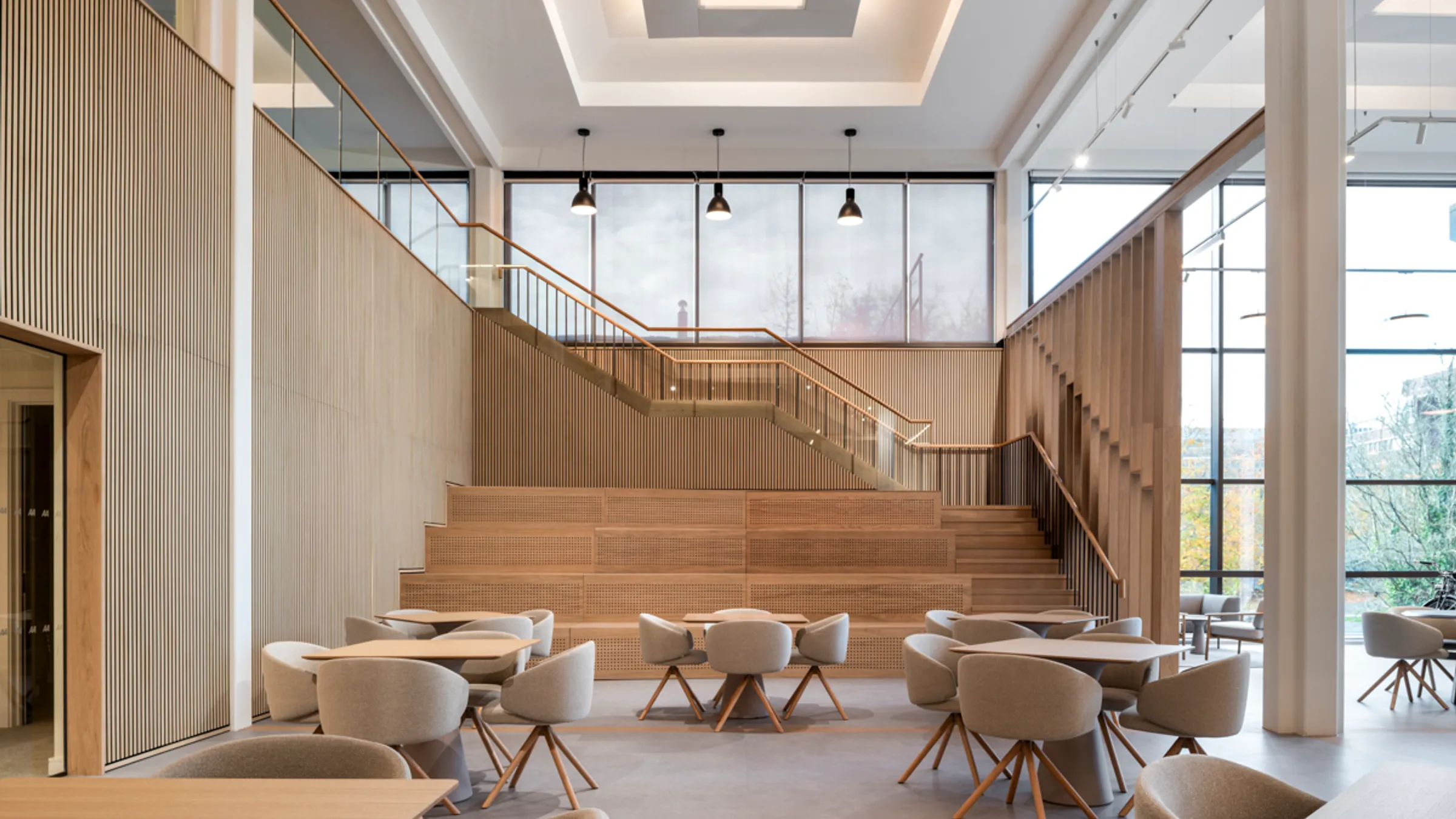
Focus areas, for example, may benefit from enclosed booths or acoustic pods that provide privacy without requiring construction. Collaboration spaces can be opened up and reimagined with tiered seating or modular lounges. Even transitional spaces like corridors, entranceways, and in-between areas can be brought into play as purposeful zones for short meetings or solo work. By redefining space based on purpose, not hierarchy, every part of the office becomes an active contributor to productivity.

3. Choose furniture that evolves with you
Once your layout strategy is in place, the next step is sourcing the right furniture. For space-saving solutions to truly perform, they must offer adaptability.
For example, flip-top tables allow rooms to shift seamlessly between workshops and desk space. Mobile partitions double as writable surfaces and offer acoustic benefits. Lounge seating with built-in power and storage supports both relaxation and work. The aim is to reduce redundancy while increasing flexibility, ensuring every item of furniture earns its place through versatility.
Compact Furniture
Compact furniture is designed to make the most of every square inch. But don’t confuse ‘compact’ with ‘cramped’. High-quality compact furniture achieves optimal performance with a reduced footprint, offering:
Efficient workstations for hot-desking, touchdown areas or hybrid working
Slimline storage that blends into the architecture or zones space naturally
Meeting solutions like foldaway tables or drop-leaf configurations
Integrated power and data within smaller furniture systems to eliminate clutter
For businesses consolidating into smaller premises or rethinking departmental layouts, compact furniture provides a reliable foundation without feeling restrictive.
Multipurpose Furniture
Multipurpose furniture is an essential element in the design of dynamic workplaces, offering adaptability without clutter. These versatile pieces are designed to perform several functions, which helps reduce the need for multiple separate items and supports a more efficient use of space.
Take, for instance, modular soft seating. These pieces can be effortlessly rearranged, enabling teams to shift a space from a relaxed breakout area into a collaborative workshop zone in minutes. It empowers users to shape their environment based on the immediate need, whether that’s informal conversation or focused group work.
Similarly, mobile partitions are no longer just barriers. When they double as whiteboards or acoustic panels, they not only define zones but also contribute to productivity and noise control. This dual purpose makes them an ideal feature in fast-paced or open-plan environments.
Storage walls also serve a dual function, keeping the workspace organised while helping to define spatial boundaries. Many are now designed to integrate collaboration tools, such as pinboards or writable surfaces, making them useful for impromptu brainstorming or team updates. Even banquettes have evolved beyond seating. With built-in charging points and AV integration, they offer plug-and-play convenience for meetings, presentations, or casual working. These smart features allow staff to stay connected and productive, wherever they choose to sit.
This approach to furniture is particularly beneficial in agile or activity-based working environments, where a single space might need to support deep focus in the morning, team collaboration mid-day, and client meetings in the afternoon. Multipurpose furniture makes that level of fluidity possible, ensuring the workspace adapts to the people, not the other way around.

4. Design for hybrid and co-working usage
Modern workspaces must be able to flex around fluctuating occupancy and unpredictable schedules. This is especially true in hybrid and co-working-inspired environments, where the office serves as a collaborative hub rather than a fixed base for all employees.
To support this, design choices should allow spaces to contract and expand as needed. Hot-desking areas should be designed for quick set-up and clear-away, with integrated cable management and shared storage to support mobile working. Furniture must be easy to move, store and rearrange, making it simple to accommodate everything from focused solo work to all-hands meetings. Co-working elements, such as touchdown tables, café-style nooks or relaxed collaboration areas, benefit from solutions that blur the line between comfort and commercial.
The most successful hybrid spaces are those that adapt daily without losing their sense of cohesion or brand identity.
Avoiding the Pitfalls of Small Office Design
Without the right planning, compact spaces can feel chaotic, crowded or restrictive. Key principles to keep in mind:
Avoid over-specifying – every item should have purpose
Prioritise flow – think about how people move and interact within the space
Invest in quality – poorly designed compact furniture can feel cramped or flimsy
Think vertically – walls can host fold-down surfaces, storage or collaborative tools
Working with an experienced office furniture consultancy company ensures that compact solutions deliver on both functionality and aesthetic appeal.
Sustainability and Long-Term Value
Well-specified space-saving furniture doesn’t just save square footage, it supports sustainability goals too. By reducing the amount of materials used, extending product life through modularity, and avoiding the need for constant replacements, these solutions support circular design principles.
Additionally, designing smaller spaces with flexibility in mind reduces the need for future fit-outs or office moves, offering long-term cost savings.
Space Efficiency is Business Efficiency
In a commercial environment where space is at a premium and agility is everything, the case for space-saving office furniture is clear. Whether you're rethinking an underused floor, opening a satellite site or transitioning to hybrid working, compact and multipurpose furniture helps you get more from your space, without compromise.
Ready to reimagine your workplace? Our office furniture consultancy team can guide you through every stage, from audit and specification to implementation and post-occupancy review. So get in touch with us today!
Published on
October 17, 2025