The Role of Biophilia in Furniture Selection

Written by
Gareth van Zyl
Contents
Many businesses believe biophilic design simply means placing a few plants around the office. In truth, it is a philosophy that brings nature into the built environment to support human biology. While a potted fern on a desk can brighten the space, true biophilic design considers how our nervous systems react to natural patterns, materials, and spatial layouts.
As workplace strategies change, progressive organisations recognise that wellness and productivity connect directly to environmental design. The focus has shifted from viewing office design as merely aesthetic to seeing it as a critical factor in corporate performance. Furniture is not just a capital expense; it is a vital tool for employee health and corporate culture. When furniture selection incorporates biophilic principles, the workspace helps shape how people think, collaborate, and recover during the workday.
How does a biophilic furniture strategy impact workplace performance?
Biophilic furniture solutions improve corporate performance by using natural acoustic buffers, organic layouts, and tactile materials to reduce mental fatigue and minimise distractions.
The business case for biophilic design goes beyond mood improvements. Research shows measurable benefits, including lower stress and reduced mental fatigue. Natural acoustic buffers in biophilic furniture also decrease distractions, supporting better concentration.
In addition to performance gains, a health-focused biophilic office helps attract and retain talent. In competitive hiring markets, workspace quality reflects corporate values.
Analysing how furniture helps or hinders productivity and utilising workplace furniture as tools for wellness is an incredibly important step in creating a biophilic office space. Understanding the interplay between material choice, spatial layout, and human biology allows for specific solutions that deliver measurable returns rather than decorative additions.
Why material specification matters in biophilic environments
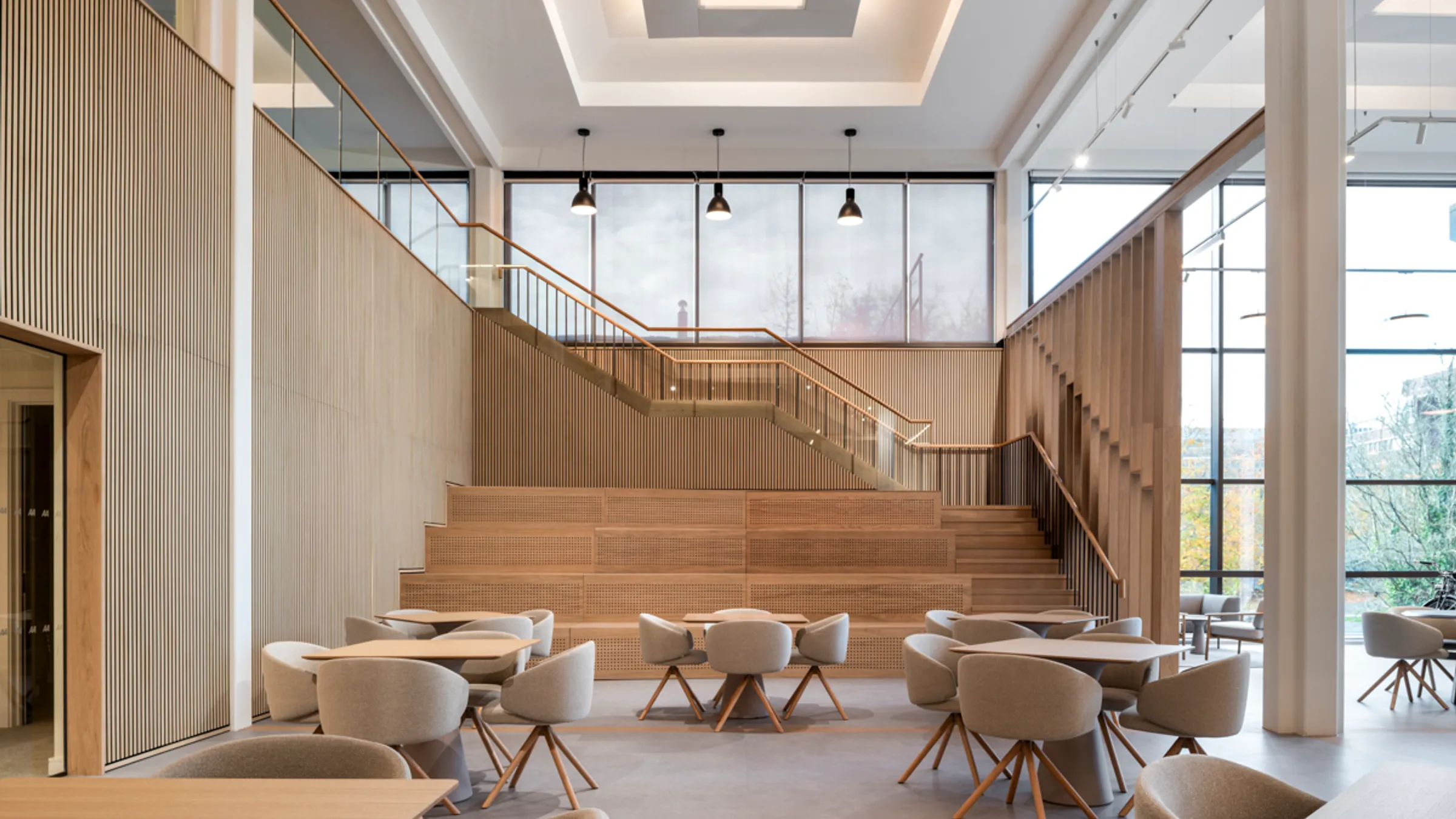
Material specification influences both biological and acoustic performance. Replacing cold plastics with tactile, plant-based alternatives fosters sensory connections that support cognitive restoration.
Biophilic furniture design centres on the “indirect experience of nature” through natural analogues. This involves using materials that evoke nature, even without direct outdoor access. Engaging the senses with natural materials reduces stress and supports cognitive restoration.
Practical design starts by replacing cold plastics and metals with tactile, grounding elements. The table below highlights key material categories and their workplace benefits:
Material Class | Tactile & Biological Benefit | Functional Workspace Performance |
Raw Wood Grains | Grounding elements that connect users directly to natural forms. | The material feels and ages differently, developing a natural patina over time. |
Natural Cork & Stone | Evokes natural environments whilst providing tactile diversity. | Cork provides inherent thermal warmth across active office touchpoints. |
Organic Wool Textiles | Softens clinical, rigid lines with rich, natural textures. | High-performance wool fibres absorb sound in ways synthetic alternatives cannot replicate. |
Equally important is prioritising low-VOC finishes, natural oils, and non-toxic adhesives to safeguard indoor air quality. Understanding sustainable workplace design and environmental impact ensures that biophilic furniture does not simply mimic nature aesthetically whilst causing ecological harm through its production.
What is the role of organic geometry in neuroinclusive workspace design?
Organic geometry creates diverse spatial layouts that break workplace monotony and provide distinct zones for prospect and refuge, accommodating different neurodivergent sensory needs.
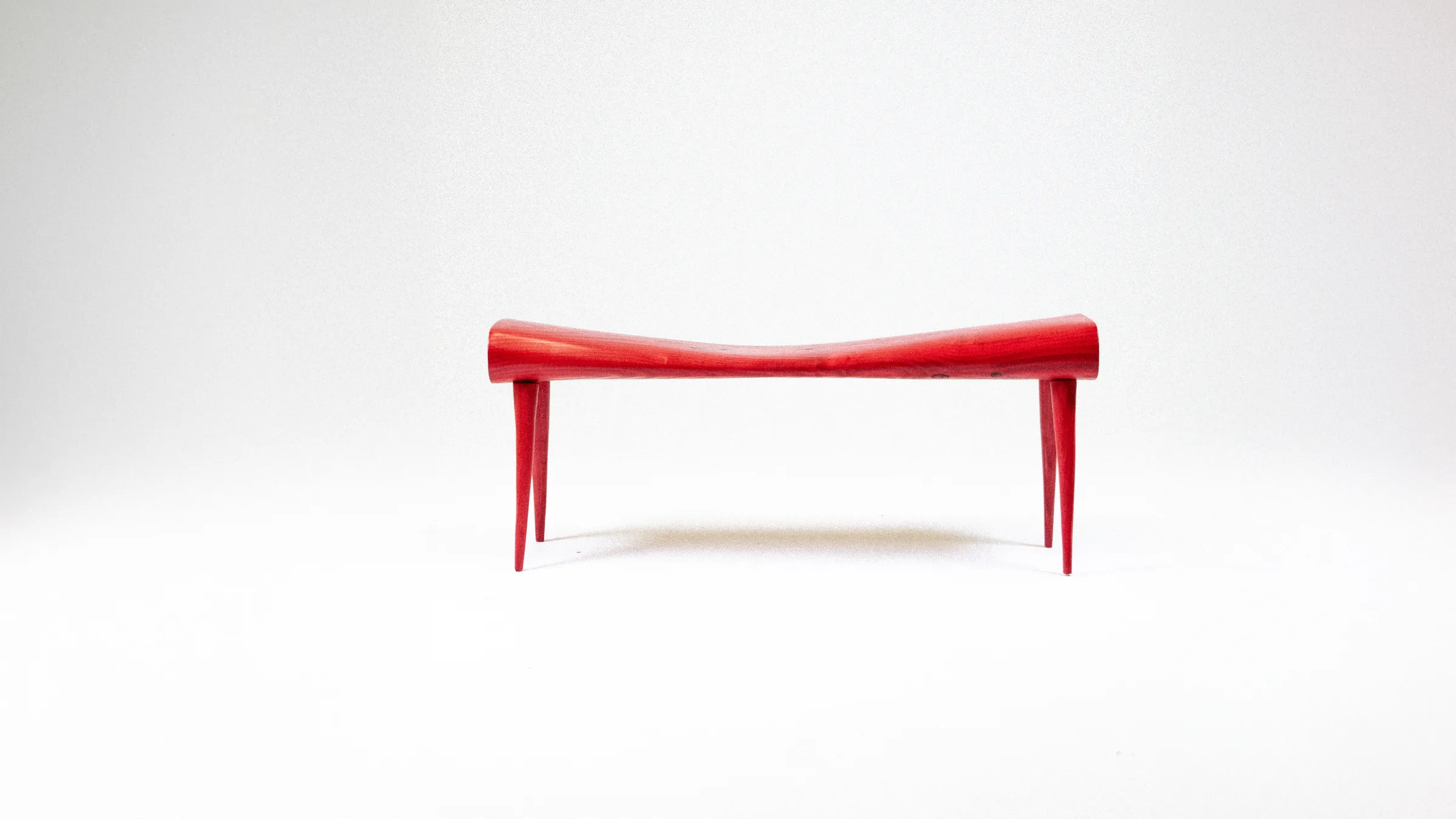
Humans evolved in natural landscapes with curves, asymmetry, and varied topography, not in rigid, grid-like environments. Biophilic furniture design uses organic shapes and spatial layouts, applying concepts like “prospect and refuge” to create comfortable spaces.
This approach moves away from rigid, geometric desk arrangements. Instead, specify furniture with soft curves, flowing lines, and asymmetrical forms that mimic natural topography. The guide below explains how to apply these principles:
Designing for "Refuge" (Deep Focus & Sensory Comfort)
Utilise modular workplace furniture arrays to specify quiet, enclosed booths that provide the visual enclosure necessary for deep concentration, supporting individuals who require sensory containment to perform at their best.
Designing for "Prospect" (Collaboration & Spatial Awareness)
Build open, collaborative zones using furniture with soft curves, flowing configurations, and clear sightlines for individuals who thrive on ambient activity and expansive visual access.
This approach ties directly into neuroinclusive workplace design, creating diverse spaces for different sensory needs and working styles. By incorporating dynamic workplace furniture ideas that break office monotony, biophilic principles become practical tools for inclusion rather than abstract ideals. The spatial variety found in natural environments becomes a blueprint for furniture placement and specification.
The use of living furniture in biophilic offices
What is Living Furniture?
Living furniture intentionally integrates live biological elements into functional workplace pieces. Unlike simply placing potted plants in unused corners, living furniture makes vegetation a structural part of the workspace layout.
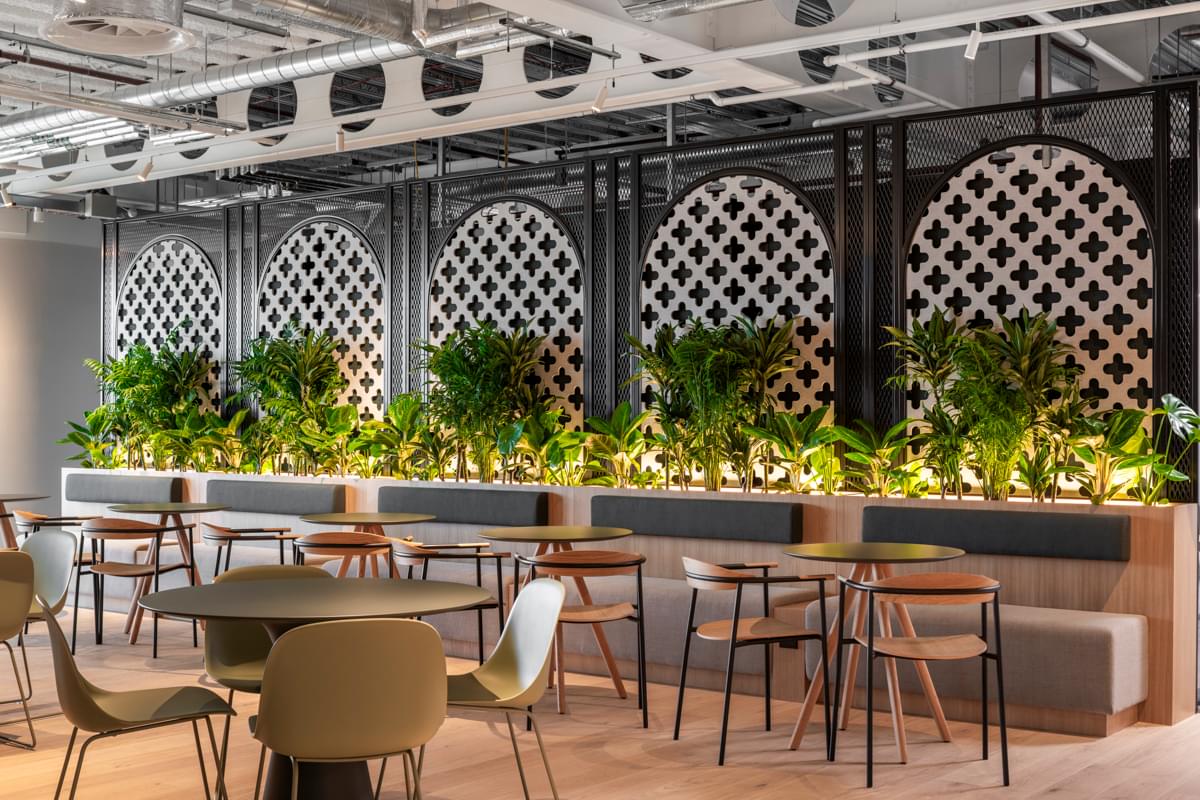
This transforms standard office assets like storage units, shelving, and acoustic partitions into multi-functional features that bring nature into the workspace. Choose biophilic furniture with integrated planter boxes or built-in trellis systems to make vegetation a structural element.
How living furniture solves zoning and open-plan acoustic issues
Living furniture solutions integrate vegetation as functional zoning elements, utilising multi-functional planter storage and mobile green walls to absorb open-plan sound whilst maintaining natural light flow.
The most direct experience of nature in the workplace comes through living elements integrated into functional furniture. This approach moves beyond placing standalone planters in corners to making vegetation a structural component of the workspace itself.
Select multi-functional biophilic furniture, such as storage units, shelving, and dividers with integrated planter boxes or trellis systems. These pieces offer storage or separation while introducing greenery that improves air quality and biophilic connection.
Mobile green walls or acoustic moss panels serve as flexible dividers that absorb sound and introduce natural elements, addressing acoustic challenges in open-plan offices without using solid partitions.
This highlights the value of expert furniture specification and strategic placement capabilities. A skilled consultant addresses zoning and acoustic issues in open-plan layouts using living furniture solutions rather than rigid drywall, maintaining visual connection and light flow whilst creating necessary boundaries.
Understanding the power of furniture placement means recognising that a well-positioned living screen can transform an underperforming zone into a productive, comfortable area.
Transforming workspaces through biophilic principles
Biophilic furniture design is now a strategic necessity for sustainable, high-performing businesses. Using natural materials and organic shapes measurably improves well-being, productivity, and talent retention.
Viewing furniture as a dynamic interface between people and their environment reflects the evolution of workplace design consultancy.
FAQs
Which natural materials are most effective for improving acoustics in an open-plan office?
Wool and cork are the strongest performers. Wool upholstery on seating, panels, and screens absorbs mid and high-frequency sound in ways that synthetic fabrics simply cannot match. Cork, applied to wall surfaces or integrated into furniture bases, adds a secondary layer of acoustic dampening whilst also providing thermal comfort.
For more significant sound management challenges, acoustic moss panels used as living dividers combine natural material performance with biophilic connection, addressing noise without closing off the space entirely.
Do biophilic furniture materials require significantly more maintenance than standard office furniture?
Not in practice. The materials most commonly specified in biophilic environments, including treated wood, cork, stone surfaces, and wool textiles, are selected in part for their durability and longevity.
Solid wood develops a patina over time rather than degrading, and quality wool textiles are hardwearing with straightforward cleaning requirements. The key is in the specification: sourcing pieces finished with natural oils and low-VOC treatments rather than heavy synthetic coatings means maintenance is manageable and the materials continue to perform well over the long term.
What is the difference between biophilic design and simply adding plants to an office?
Biophilic design is a considered design philosophy, not a decorating choice. Whilst plants are one element, a genuine biophilic approach encompasses material specification, spatial configuration, acoustic performance, and the way natural patterns and forms are embedded into the built environment.
The goal is to create conditions in which the nervous system responds positively to its surroundings, reducing stress and supporting cognitive function throughout the working day. A plant on a desk may lift the mood briefly; a biophilically designed workspace sustains performance over time.
Is biophilic design only suitable for large office refurbishments, or can it be applied incrementally?
Biophilic principles can be introduced at any scale. A full refurbishment offers the opportunity to address spatial layout, material specification, and zoning from the ground up, but meaningful improvements can also be made through targeted furniture changes: replacing synthetic upholstery with wool textiles, introducing cork or wood-surfaced pieces, or specifying a mobile green wall to divide an open-plan area.
The most effective approach is to audit what the current environment is doing to occupant wellbeing, identify the areas of greatest impact, and build from there.
Published on
July 20, 2026